- GymKitMap
- Lifting Accessories
- Guide 04
How to Choose a Weightlifting Belt
- Format
- Buying guide
- Read
- 7 min
- Updated
- November 17, 2026
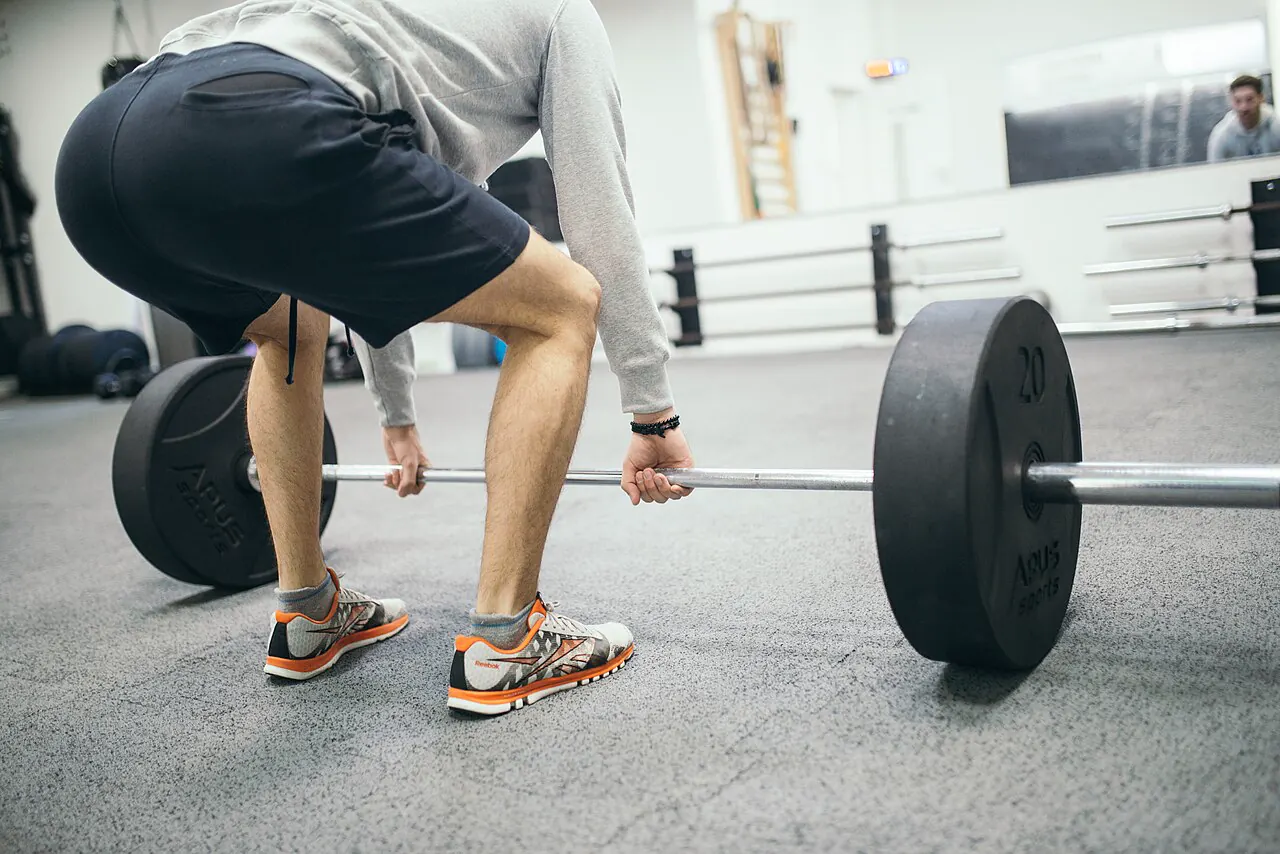
Pick the belt by your lifts: a uniform-width leather belt for squats and deadlifts, a tapered or nylon belt for Olympic lifts and general training. Size it by measuring your waist at the navel, not by pants size, and choose a closure you can adjust easily.
Written for: Lifters training squats, deadlifts or Olympic lifts who are buying a first belt
A lifting belt gives your abdomen something firm to brace against. When you take a breath and tighten your trunk, the belt adds resistance around your middle. That is the mechanical job. A belt is not a substitute for learning to brace, and it is not a treatment for back pain.
Leather or nylon
- Leather: stiff and supportive, holds its shape, and takes time to break in. Common for powerlifting.
- Suede-lined leather: same core with a softer surface that grips your shirt and stays put.
- Nylon and other synthetics: lighter and more flexible, usually closed with hook-and-loop. Easier to move in for Olympic lifts, carries and general training.
Width and shape
Uniform-width belts, often about 4 inches all the way around, give the same surface front and back. Tapered belts are wide at the back and narrower at the front, which leaves room to bend at the hips and rack a bar on the shoulders. If you have a short torso, a wide belt can dig into your ribs or hips; a narrower front helps.
Thickness
Leather belts typically come around 10 mm or 13 mm thick. Thicker belts are stiffer and take longer to break in. Many lifters find a 10 mm belt easier to live with. Competitive powerlifters should check their federation's rules, which set limits on belt width and thickness.
Closures
| Closure | How it adjusts | Speed on and off | Watch for |
|---|---|---|---|
| Single prong | Holes, by hand | Moderate | Simple and durable |
| Double prong | Holes, two prongs | Slower | Fiddly to line up; little extra benefit for most |
| Lever | Set once with a screwdriver | Very fast | Hard to change tightness mid-session |
| Hook-and-loop | Any point along the strip | Fast | Grip weakens over time; keep it clean |
How to size a belt
- Wear what you train in Measure over a gym shirt or the layer you usually lift in.
- Measure at the navel Wrap a soft tape around your waist at navel height, where the belt will sit. Breathe normally; do not suck in.
- Ignore pants size Pants sit lower on the hips, so your pants size is often smaller than your waist at the navel.
- Match it to the maker chart Choose the size that puts your number near the middle of the adjustment range, so you have room to tighten or loosen.
- Between sizes Many makers suggest the smaller size for leather, since it stretches slightly as it breaks in. Follow the specific maker advice.
Which belt for which training
- Powerlifting: uniform-width leather, prong or lever.
- Olympic weightlifting: tapered leather or nylon, so you can catch the bar in a deep squat.
- CrossFit-style and general training: nylon with hook-and-loop, fast to take off between movements.
- Strongman: often a wider-front belt or a lever belt; check event rules.
Breaking in a leather belt
A new stiff leather belt can feel like a board and press into your ribs or hips. That eases with use as the leather shapes to your body. Wearing it for warm-up sets, and rolling it gently in both directions with your hands, helps it soften. Avoid soaking, heating or heavy oiling to speed things up; those can weaken the leather or stain the lining. Manufacturers usually describe their own break-in advice in the care notes.
Quick checks in the store or on the listing
- Stitching runs close to the edges and is even, with no loose ends.
- The buckle or lever is attached with rivets or screws, not only stitching.
- Edges are rounded or finished so they do not cut into your skin when you bend.
- The size chart lists a waist range for each size and says where to measure.
- For competition, the listing states width and thickness so you can compare it with your federation's limits.
Questions people ask
When should I wear a lifting belt?
Many lifters use one only on heavier sets of squats, deadlifts and overhead presses. A coach can help you decide when it fits your program.
How tight should a lifting belt be?
Tight enough that you can brace into it, loose enough to take a full breath. If you cannot breathe in, it is too tight.
Should I wear the belt in front or at the back of my hips?
Most people wear it around the navel. Some move it up or down a little for comfort on specific lifts.
Is a lever belt worth it?
Lever belts are fast to close and open. They suit people whose waist size stays steady. If you want to change tightness often, a prong or hook-and-loop belt is easier.
Sources
This guide is research-based: it draws on manuals, published specifications and safety guidance, not on hands-on testing. If we link to a retailer, we may earn a commission at no cost to you. Affiliate disclosure