- GymKitMap
- Resistance Bands
- Guide 03
Resistance Band Types Explained
- Format
- Explainer
- Read
- 6 min
- Updated
- November 17, 2026
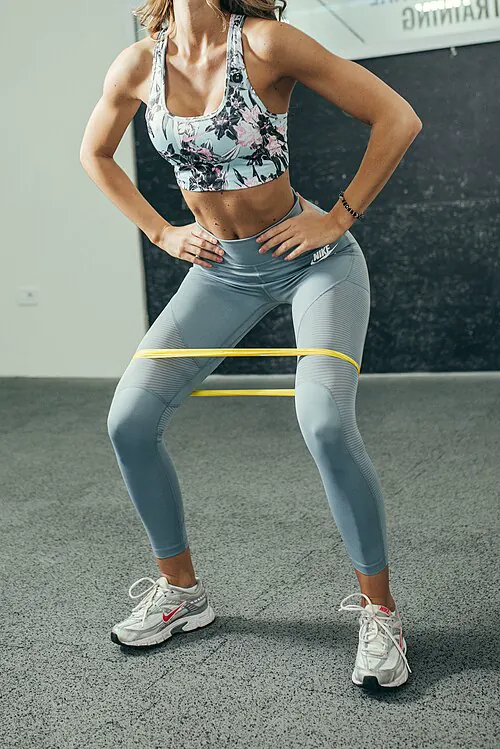
Large loop bands suit pull-up assistance and heavy stretching moves; tube bands with handles act most like cables; mini bands go around the legs for hip work; flat therapy bands give light, gradual resistance. Compare by width and the maker's printed range, not by color.
Written for: Beginners and regular trainers adding bands to home or gym workouts
A resistance band resists more the farther you stretch it. That makes it feel light at the start of a move and harder at the end, unlike a dumbbell, which weighs the same throughout. Four types cover most of what you will see on sale.
Large loop bands
These are long continuous loops, often around 41 inches, made from layers of latex. Width sets the resistance: a narrow band is light, a wide one can be very heavy. People use them for assisted pull-ups, banded stretches, and adding tension to barbell lifts.
Tube bands with handles
A rubber tube with a handle at each end. Many sets use clips so you can swap tubes or stack several on one handle. A door anchor lets you fix one end for rows, presses and chops. These behave most like a cable machine.
Mini bands
Short loops that go around the thighs or ankles, used for side steps, glute bridges and similar hip work. Latex mini bands are thin and stretchy but can roll up. Fabric versions are wider and stay flat, with less stretch.
Flat therapy bands
Flat sheets of latex or latex-free material, sold in cut lengths or on a roll. You tie or wrap the ends. They give light, gradual resistance and are common in rehab settings. If you are using bands as part of physical therapy, follow the plan your therapist gives you.
| Type | Shape | Typical uses | Attachments | Main weak point |
|---|---|---|---|---|
| Large loop | Long closed loop | Pull-up assist, stretching, banded lifts | None needed | Nicks and tears in the layers |
| Tube with handles | Tube, handles at ends | Rows, presses, curls, cable-style moves | Handles, door anchor, ankle straps | Clips and anchor stitching |
| Mini band | Short loop | Hip and glute work, warm-ups | None | Rolling (latex) or stretching out (fabric) |
| Therapy band | Flat strip | Light resistance, rehab plans | Tied or held | Thin edges tear once nicked |
Reading resistance labels
Makers print a resistance range, usually in pounds. That range describes tension across a stretch, and different makers rate bands at different stretch lengths. Colors are also not standard: one brand's red is not another's. To compare across brands, look at band width and thickness along with the printed range.
How to choose
- List your main exercises Pull-up assistance points to loop bands; cable-style rows and presses to tube bands; hip work to mini bands.
- Pick a range, not one band Sets with several resistances let you match the band to each exercise.
- Check the attachments For tube bands, see whether the door anchor, handles and ankle straps are included.
- Plan storage away from sun and heat Light and heat break down latex. A drawer or bag works.
Picks by discipline
- Powerlifting and barbell training: large loop bands, anchored to a rack, to add tension at the top of squats, bench presses and deadlifts, plus a light band for warm-ups.
- Calisthenics: a set of large loop bands in several widths for assisted pull-ups and dips, so you can step down to a lighter band as you get stronger.
- Home and travel training: tube bands with handles and a door anchor, which cover pushing, pulling and leg moves in a small bag.
- Glute and hip work: mini bands, latex or fabric, for side steps, bridges and clamshells.
- Mobility and light work: flat therapy bands or the lightest loop band for shoulder and hip mobility drills.
Bands also work alongside weights you already own. A loop band over a barbell or a mini band during dumbbell squats adds tension at the top of the lift, where the free weight feels lightest. Check that the band is rated for the length you will stretch it to.
Questions people ask
Can resistance bands replace weights?
They can cover many exercises, especially at lighter loads and for travel. Heavy lower-body work is harder to load with bands alone.
Why do my band colors not match another set?
There is no industry color standard. Compare by width and the printed resistance range.
How long do resistance bands last?
It depends on use, storage and material. Replace a band as soon as you see nicks, cracks or thin spots.
Are fabric bands better than latex?
Fabric mini bands stay flat and do not pinch as much. Latex stretches more and gives a wider range of tension. Many people keep both.
Sources
This guide is research-based: it draws on manuals, published specifications and safety guidance, not on hands-on testing. If we link to a retailer, we may earn a commission at no cost to you. Affiliate disclosure