- GymKitMap
- Strength Equipment
- Guide 02
How to Compare Adjustable Dumbbell Mechanisms
- Format
- Comparison
- Read
- 7 min
- Updated
- November 17, 2026
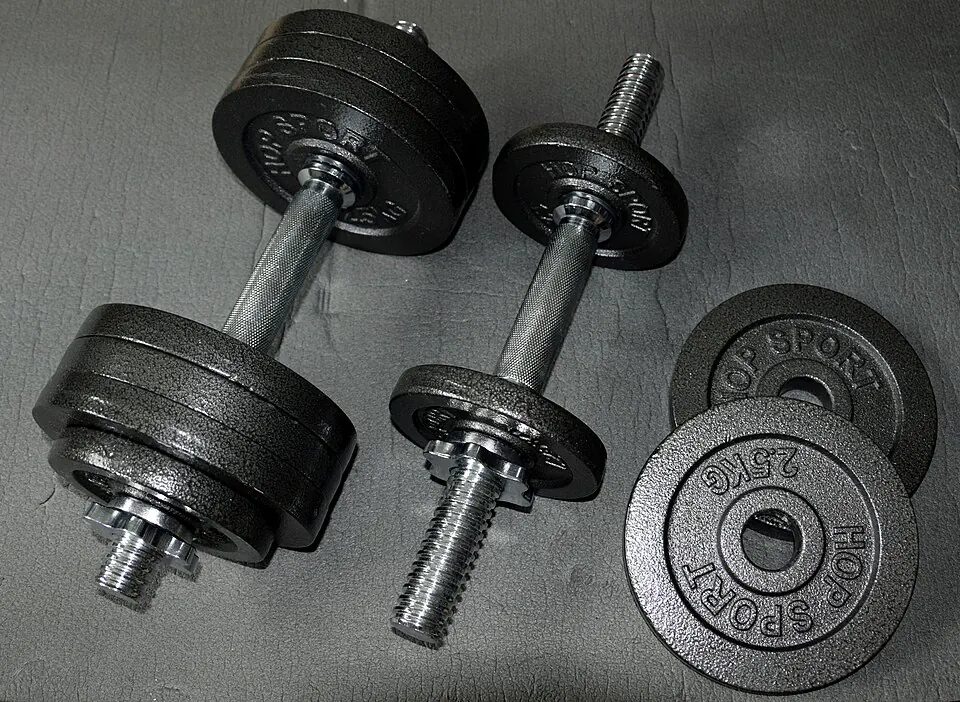
Dial and selector dumbbells change weight fastest but are often long and bulky at full load. Pin-select dumbbells are quick and sturdy but heavy to move between settings. Spin-lock handles are slow to change but compact, simple and easy to expand with more plates.
Written for: People buying their first adjustable dumbbells for home strength training
Adjustable dumbbells replace a rack of fixed pairs with one handle per hand. The mechanism decides how fast you can change weight, how big each step is, how the handle feels at the heaviest setting, and what can go wrong. There are three common designs.
Dial and selector dumbbells
The handle sits in a tray or cradle with plates on both sides. You turn a dial or slide a selector, and the handle picks up the plates you chose when you lift it. Changing weight takes seconds.
- Fast changes, which suits drop sets and circuits.
- Plates are thin and many, so the handle is long even at light settings on some designs.
- The handle usually has to go back into the cradle to change weight, and the cradle needs to sit level.
- Plastic parts in some selectors can crack if a handle is dropped. Most manuals say not to drop them.
Pin-select dumbbells
Plates stack inside a frame, and a pin or plunger locks the chosen number of plates to the handle. Some designs work like a small weight-stack machine. Changes are fast, and steel frames tend to be sturdy.
- Quick changes, usually a little slower than a dial.
- Often blockier in shape, which some people find awkward for curls or flyes.
- Check that the pin seats fully and cannot back out during a set.
Spin-lock handles
A threaded handle takes standard small plates, and screw-on collars hold them in place. This is the oldest and simplest design. Changing weight takes longer, because you remove both collars and swap plates.
- Compact at every weight: the handle is only as long as the plates on it.
- Easy to expand by buying more plates, if they match the handle bore size.
- Collars loosen over a session. Re-tighten them between sets.
- Few moving parts, so less to break.
| Dial / selector | Pin-select | Spin-lock collars | |
|---|---|---|---|
| Change speed | Seconds | Seconds | About a minute per pair |
| Handle length at full weight | Often long | Medium, blocky | Short to medium |
| Weight steps | Fixed by design | Fixed by design | Set by the plates you own |
| Expandable | Sometimes, with a maker add-on kit | Rarely | Yes, with matching plates |
| Main wear points | Selector, dial, cradle | Pin and frame | Threads and collars |
| Drop tolerance | Usually not allowed | Varies by maker | Usually tolerant; plates can chip |
What to check on the spec sheet
- Write down your heaviest planned weight Pick a range that covers what you lift now plus a margin for progress. A handle that tops out too low is the most common regret.
- Look at the step size Big jumps between settings make small upper-body lifts hard to progress. Smaller steps at the low end help on lateral raises and curls.
- Find the handle length at full weight Long handles can hit your chest or thighs on presses and rows. The manual or product drawing usually lists overall length.
- Check grip diameter and texture Knurled steel holds better with sweaty hands; rubber or plastic grips feel softer but can slip.
- Read the use limits Look for whether dropping is allowed, whether the handle can be used away from its tray, and the maximum rated load.
Matching the mechanism to your training
- Circuits, supersets and drop sets: dial or selector designs, because changes take seconds and you stay in the session.
- Slow strength work with long rests: spin-lock handles are fine, since you have time to swap plates between sets.
- Shared use by people of different strength: fast-change designs let each person reset the weight in seconds.
- Lifts close to the body, such as curls, hammer curls and flyes: shorter handles feel better, so check the length figure carefully.
- If you already own plates: a spin-lock handle with the same bore lets you reuse them instead of buying a new system.
Also check how the handle behaves between sets. Dial and selector designs must go back into their cradle to change weight, and some cannot be used without it. Spin-lock and many pin designs work as stand-alone handles, which helps for lifts like lunges or walking carries.
Questions people ask
Which adjustable dumbbell type is best for beginners?
Any type works. Dial and selector designs are easiest if you change weights often. Spin-lock handles cost less to expand and have fewer parts to break.
Can I drop adjustable dumbbells?
Most dial and selector designs say not to. Spin-lock handles with iron plates tolerate it better, but plates can chip. Follow the manual.
Do adjustable dumbbells feel different from fixed ones?
Often yes. Dial-style handles can be longer and wider, which changes how they sit in presses and flyes. Spin-lock handles feel closest to fixed dumbbells.
How do I know the weight is accurate?
Makers list plate tolerances in some manuals. If precision matters to you, look for that figure in the spec sheet.
Sources
This guide is research-based: it draws on manuals, published specifications and safety guidance, not on hands-on testing. If we link to a retailer, we may earn a commission at no cost to you. Affiliate disclosure