- TrainVoya
- Strength Equipment
- Guide 10
Cast Iron vs. Competition Kettlebells: How to Choose
- Format
- Comparison
- Read
- 7 min
- Updated
- November 18, 2026
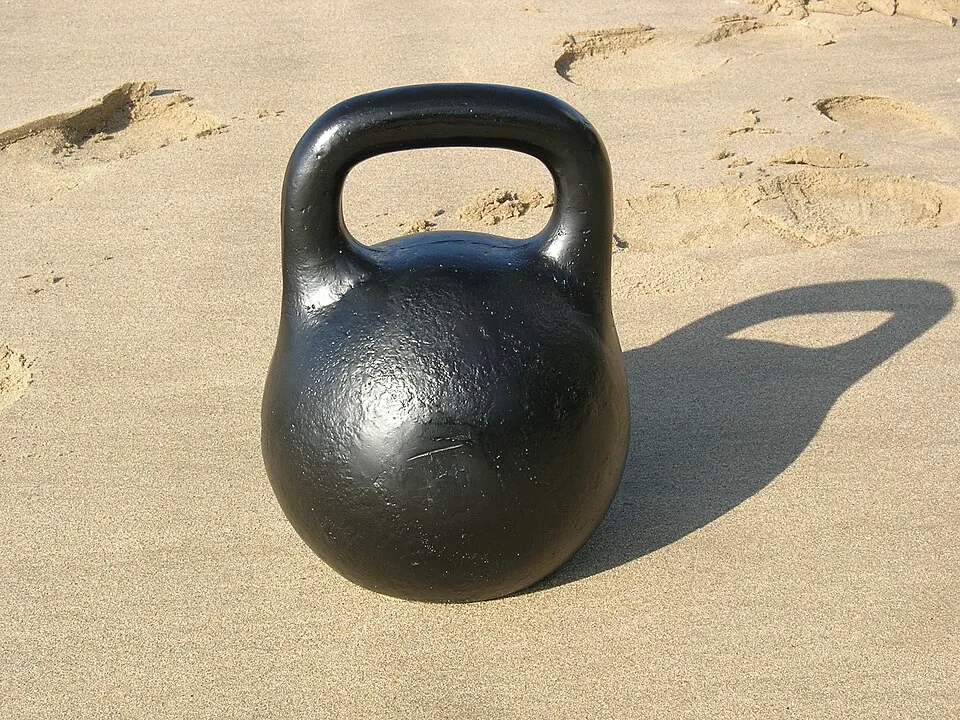
A cast iron kettlebell grows with its weight and usually has a wider handle that takes two hands. A competition kettlebell is a steel shell built to one set of outer dimensions at every weight, so it sits in the same place on your forearm as you go heavier. Two-hand swings favor cast iron; one-arm cleans, presses and snatches favor competition bells.
Written for: People buying a first kettlebell, or a second one, for home strength training
Two kettlebells with the same number printed on them can be very different objects. The difference is in how they are made, and it changes how the bell sits in the hand, how it rests on the forearm and which lifts feel right.
Cast iron kettlebells
A cast iron bell is one solid piece of metal. More weight needs more iron, so the body gets bigger as the weight goes up, and makers usually scale the handle with it. Light bells are small with a thin handle; heavy bells are large with a thick one. The handle tends to be wide enough for both hands, which suits two-hand swings and goblet squats.
Competition kettlebells
Competition bells are built for kettlebell sport, where athletes repeat one-arm lifts for many minutes. They are hollow steel shells, filled to reach the target weight, so the outside can stay the same at every weight. A rules database that collects the federations' rulebooks gives the standard figures as 280 mm in height and 210 mm across the body, with a handle of about 35 mm; one federation lists 34 mm and another allows a range of 32 to 35 mm.
Because the shell does not change, a heavier bell rests on the same spot of your forearm in the rack and overhead positions as a lighter one. The trade-off is the handle: it is narrower from side to side, with a squarer opening, so two hands fit poorly.
| Cast iron | Competition | |
|---|---|---|
| Construction | Solid casting | Hollow steel shell, filled to weight |
| Size as weight rises | Grows | Stays the same |
| Handle thickness | Varies with weight and maker | One standard diameter |
| Handle opening (window) | Wider; usually fits two hands | Narrower and squarer; made for one hand |
| Light weights | Small and compact | Full-size shell even when light |
| Common finish | Powder coat, paint or e-coat | Painted body, often bare steel handle |
| Typical weight steps | Set by the maker, in kg or lb | Sport weights in kg |
Which lifts suit which bell
- Two-hand swings, goblet squats and deadlifts: cast iron, for the wider handle.
- One-arm cleans, presses, snatches and long sets: competition, for the consistent shape against the forearm.
- Push-ups or rows on the handles: neither is built for it. A round bell can roll, so check the manual and prefer a wide, flat base.
- Lifters with small hands: compare handle diameters. A thick handle on a heavy cast iron bell tires the grip sooner.
- Light bells for learning: cast iron is smaller at low weights, which some people find easier to move around the body.
Weights and colors
Sport bells follow fixed weights. The World Kettlebell Sport Federation rules admit 8, 12, 16, 20, 24, 28, 32, 36, 40 and 48 kg. Competition bells are also color-coded by weight, but the codes are set by each federation and are not identical across all of them, so read the number on the bell, not the paint.
Cast iron lines are sold in kilograms or pounds, sometimes with smaller steps between sizes. If you plan to build a set over time, check that the line you start with offers the next weights you will want.
What to check in a listing
Before you order a kettlebell
0 of 7 packedQuestions people ask
Are competition kettlebells better than cast iron?
Not better, different. Competition bells keep one size at every weight, which helps one-arm lifts. Cast iron bells are more compact at light weights and usually take two hands on the handle.
Can I do two-hand swings with a competition kettlebell?
It is possible, but the handle is narrow, so many people can only fit part of each hand. If two-hand swings are your main lift, a cast iron bell with a wider handle is the easier fit.
Why are competition kettlebells all the same size?
Kettlebell sport rules set the outer dimensions so technique stays the same as athletes change weight. Makers reach each weight by changing what is inside the steel shell.
What do the colors on kettlebells mean?
On competition bells, color marks the weight. The scheme is set by each federation and is not identical across all of them, so always confirm the weight stamped or printed on the bell.
Sources
This guide is research-based: it draws on manuals, published specifications and safety guidance, not on hands-on testing.As an Amazon Associate we earn from qualifying purchases. Links to Amazon are paid links; they cost you nothing extra. Affiliate disclosure