- TrainVoya
- Equipment Care
- Guide 12
How to Check, Clean and Store Resistance Bands
- Format
- How-to
- Read
- 6 min
- Updated
- November 18, 2026
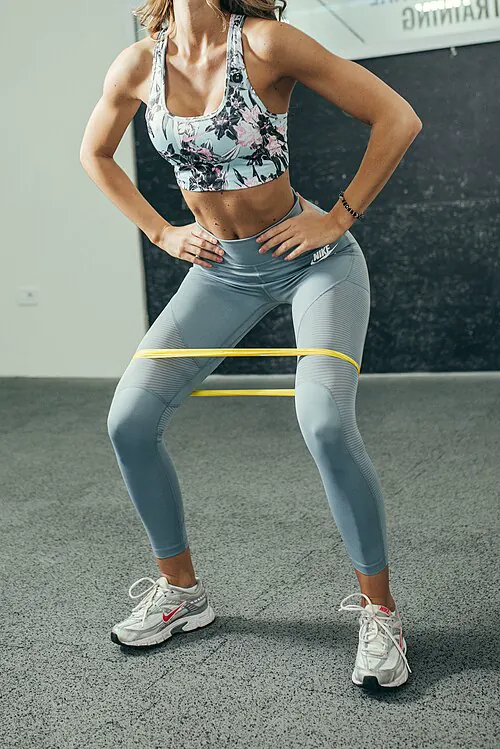
Look over every band for nicks, tears and cracks before each use and throw away any that show damage. Wash bands with mild soap and water, pat them dry, and store them cool, dry and out of sunlight, detached from handles and anchors.
Written for: Anyone training with loop bands, tube bands or flat bands at home or in a gym bag
A resistance band fails all at once. A small nick becomes a tear under load, and the band snaps back toward whoever is holding it. Bands are also cheap to replace. That makes inspection and storage the whole job. The steps below follow one manufacturer's care and safety instructions for elastic bands and tubing; the leaflet that came with your own bands takes priority.
Check before every use
- Run the whole band through your hands Stretch it lightly in good light and look along both faces and both edges. Manufacturer guidance is to look for small nicks, tears, punctures and cracks.
- Look hardest at the connection points Where a tube enters a handle, where a clip sits, and where a band passes through an anchor are the places the instructions single out.
- Check the attachments Handles, clips, door anchors and ankle straps should have intact stitching and no cracks. Make sure the band is firmly attached before you load it.
- Discard anything damaged The instruction is to throw away a band or tube with these signs, not to tape it, knot it or keep it for light work.
Anchor it properly
- Use a purpose-made door anchor or strap on a closed door, rather than a door handle, a table leg or a pipe.
- Set the anchor so that pulling on the band pulls the door further shut, and lock the door if you can.
- Keep rings, long nails and jewelry away from the band; sharp edges start nicks.
- Clear the floor of trip hazards and avoid wet floors.
- Watch the anchor point through the set, and stop if it shifts.
Cleaning
The manufacturer instructions are simple: wash with mild soap and warm water, then pat dry. If a band has been used in a chlorinated pool, rinse it with tap water afterward. Leave disinfectants and solvents alone unless the maker names a product and method for that specific band.
Storage
- Cool, dry and dark: a drawer, a box or a bag inside a cupboard.
- Out of direct sunlight and away from heaters, car dashboards and other temperature extremes.
- Detached from handles, anchors and door frames after each session, so the band rests unstretched.
- Loose, not knotted, and away from sharp objects in the same bag.
| Band type | Where to look first | Clean | Replace when |
|---|---|---|---|
| Large loop band | Edges and layered seams | Mild soap and water, pat dry | Any nick, split layer or crack |
| Tube band with handles | Where the tube meets the handle or clip | Wipe the tube; keep clips dry | Cracks near the ends, worn clip, frayed anchor |
| Latex mini band | Thin edges | Mild soap and water, pat dry | Edge nicks, thinning, loss of spring |
| Fabric mini band | Stitched seam and elastic threads | Per the care label | Seam opening, elastic showing, band stays stretched |
| Flat therapy band | Edges and knots | Mild soap and water, pat dry | Any tear or puncture |
Latex and skin
Many bands are natural rubber latex, and manufacturers print an allergy warning on them. MedlinePlus explains that latex allergy can cause a rash or asthma within minutes and, rarely, a severe reaction, and that it is best to avoid latex and use latex-free versions of products. If anyone who shares your bands has a latex allergy, buy bands labeled as made without natural rubber latex, and store them apart from latex ones.
Buying replacements
What to confirm in a listing
0 of 6 packedQuestions people ask
How do I know when to replace a resistance band?
Replace it at the first nick, tear, puncture or crack, or if a tube shows wear where it meets the handle. There is no fixed lifespan; it depends on use and storage.
Can I wash resistance bands?
One manufacturer's instructions say to wash with mild soap and warm water and pat dry. Fabric bands follow their care label. Avoid disinfectants unless the maker approves them for that band.
How far can I stretch a resistance band?
One major manufacturer says not to stretch its bands beyond three times their resting length. Check the instructions for your own bands, and choose a longer or lighter band if an exercise needs more stretch.
Is it safe to anchor a band in a door?
Use a purpose-made door anchor on a closed door, set so the pull closes the door further, and inspect the anchor before each use. Watch the anchor point while you train.
Sources
This guide is research-based: it draws on manuals, published specifications and safety guidance, not on hands-on testing.As an Amazon Associate we earn from qualifying purchases. Links to Amazon are paid links; they cost you nothing extra. Affiliate disclosure