- TrainVoya
- Cardio Gear
- Guide 07
How to Size a Jump Rope and Pick the Right Type
- Format
- How-to
- Read
- 6 min
- Updated
- November 18, 2026
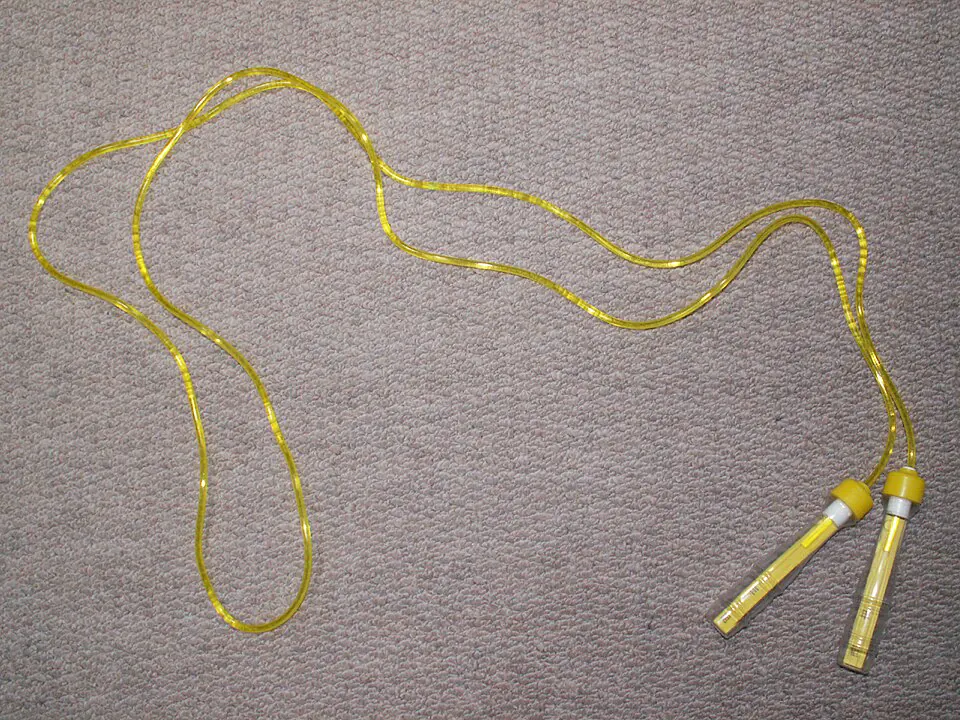
Stand on the middle of the rope and pull the handles straight up: for a beginner they should reach about chest to armpit height. Start with a light, adjustable rope at that length and shorten it in small steps as your timing improves.
Written for: Lifters and beginners buying a first jump rope for warm-ups and conditioning
A jump rope has two things to get right: length and type. A rope that is too long drags and slows down. One that is too short catches your feet. The type decides how fast the rope turns and how much it stings when you miss. Both are easy to check before you buy.
The stand-on-it length check
- Step on the middle of the rope Hold one handle in each hand and stand on the midpoint. The American Council on Exercise (ACE) describes this with one foot on the rope; other guides use both feet together. Pick one way and use it every time.
- Pull the handles straight up Keep the rope taut and bring the handles up along your sides.
- Read where they land ACE puts a good length at about chest high. One sportswear maker's sizing guide says the end of the cable, not counting the handles, should reach your sternum or armpits, and that a rope ending below the armpits is probably too short.
- Start long, then shorten Tie a knot under each handle or use the adjuster to try a shorter setting before you cut anything. A cut cable cannot be made longer.
- Check it while jumping The rope should brush the floor lightly in front of your feet. If it slaps hard or bounces, it is too long. If you have to tuck your knees to clear it, it is too short.
If you are ordering without a rope in hand, the same maker guide gives a simple rule for beginners: choose a rope about 3 feet longer than your height. Most adult ropes are sold at one long length and adjusted down, so check the stated maximum length against that figure.
Why experienced jumpers go shorter
A shorter rope travels a smaller circle, so it turns faster. Maker guidance notes that jumpers often move to a shorter rope as technique improves. The cost is a smaller margin for error: the rope passes closer to your head and feet, so uneven hand position causes more misses. Shorten a little at a time.
Rope types
| Type | Rope material | Turn speed | Suits | Watch for |
|---|---|---|---|---|
| Beaded | Cord with plastic segments | Slow, easy to hear and time | Learning rhythm, tricks, outdoor use | Heavier feel; hurts on a miss |
| PVC / licorice | Solid plastic cord | Medium | General fitness and warm-ups | Kinks if stored tightly coiled |
| Speed rope | Thin steel cable, bare or coated | Fast | Double-unders and timed work | Coating wears on rough ground; stings on a miss |
| Weighted | Thick rope or weighted handles | Slow | Shoulder and grip effort | Tiring to control; check where the weight sits |
For general exercise, ACE advises against weighted ropes and heavy handles, calling them usually too cumbersome, and suggests a lightweight rope with foam grips that will not slip when your palms sweat. Maker guidance adds that a lightly weighted rope moves more slowly, which some beginners find easier to time. If you are unsure, a plain PVC or beaded rope is the lower-risk first purchase.
Handles and rotation
- Grip: foam or textured handles hold better with sweaty hands than smooth plastic.
- Length: longer handles give more leverage for crossing moves; short handles keep the hands close for speed.
- Rotation: ball bearings or a swivel let the cable spin inside the handle instead of twisting. This matters most on thin cables.
- Adjustment: look for how the length is set. Some ropes use a screw clamp you can move; others need the cable cut to length before the handles are fastened.
What to check in a listing
Before you order
0 of 6 packedQuestions people ask
How long should a jump rope be for my height?
One published rule for beginners is a rope about 3 feet longer than you are tall. Confirm it by standing on the middle: the handles should come up to about chest or armpit height.
Can I shorten a jump rope that is too long?
Usually yes. Many ropes have a clamp or screw you slide along the cable. Try a knot or a temporary setting first, then cut the spare cable only when you are sure.
Is a speed rope a good first rope?
It works, but a thin cable turns fast and stings on a miss. A beaded or PVC rope is slower and easier to time while you learn the rhythm.
Are weighted jump ropes better for beginners?
Sources disagree. The American Council on Exercise calls weighted ropes and heavy handles usually too cumbersome, while some makers say a slightly heavier rope is easier to time. A light rope is the simpler start.
Sources
This guide is research-based: it draws on manuals, published specifications and safety guidance, not on hands-on testing.As an Amazon Associate we earn from qualifying purchases. Links to Amazon are paid links; they cost you nothing extra. Affiliate disclosure